amazee.io Documentation Transformation
December 2024 - June 2025
Between December 2024 and June 2025, GooseOps led a comprehensive documentation overhaul at amazee.io, addressing deep-rooted issues of tool fragmentation, documentation silos, and usability mismatches across technical and non-technical teams. Through cross-team interviews, a structured needs assessment, usability testing, and platform pilot studies, GooseOps delivered actionable recommendations, documentation-flow visualizations, and a clear migration path. This work now positions amazee.io to centralize its knowledge base, streamline contribution workflows, and align documentation strategy with company-wide needs without compromising on GitLab workflows or creating additional friction for non-technical contributors.
Goals and Objectives
Identify a single source of truth for company-wide documentation
Reduce tool fragmentation across Confluence, GitLab, and Google Drive
Improve discoverability and search across workstreams
Address both technical and non-technical contributor workflows
Maintain version control, security, and governance standards
Increase internal documentation adoption and clarity

Challenges
Siloed workflows
Different tools and structures per team made knowledge sharing inefficient and inconsistent.
Tool tension
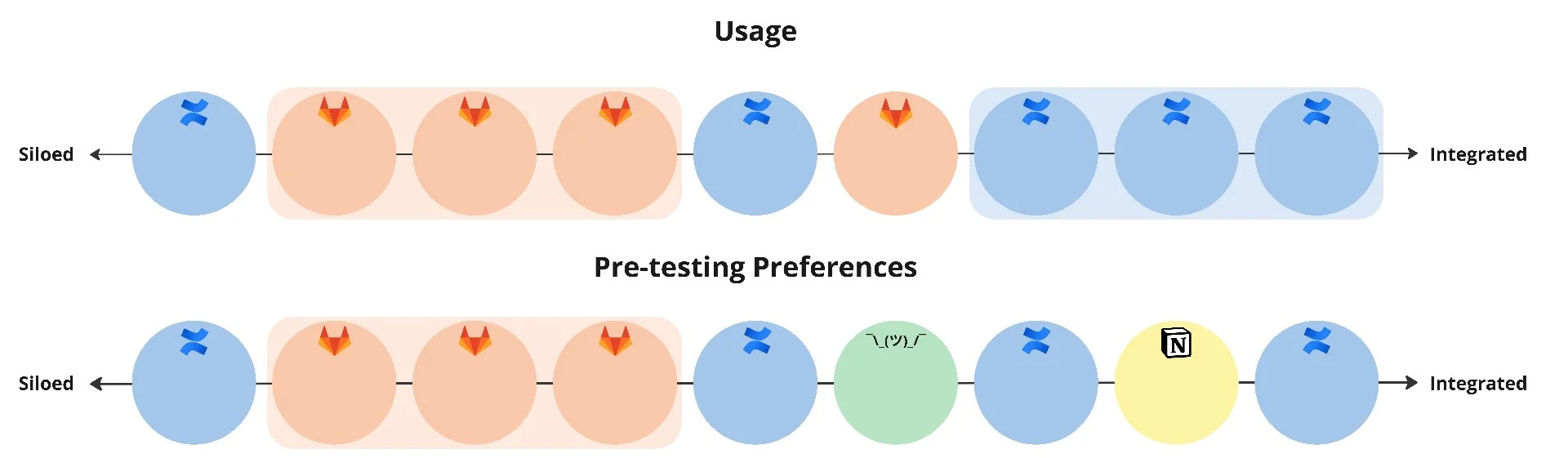
Developers preferred GitLab; non-technical users avoided it. Confluence was unpopular, and Google Docs lacked structure and governance.
Navigation pain
Difficulty locating onboarding and troubleshooting content. Search tools failed to surface what users needed.
Governance issues
Unclear content ownership, infrequent update notifications, and versioning gaps led to trust breakdowns in documentation.
Limited scalability
Existing systems couldn't support documentation growth or role-based permissions effectively.
Tool Usage Patterns
Related Visual Assets
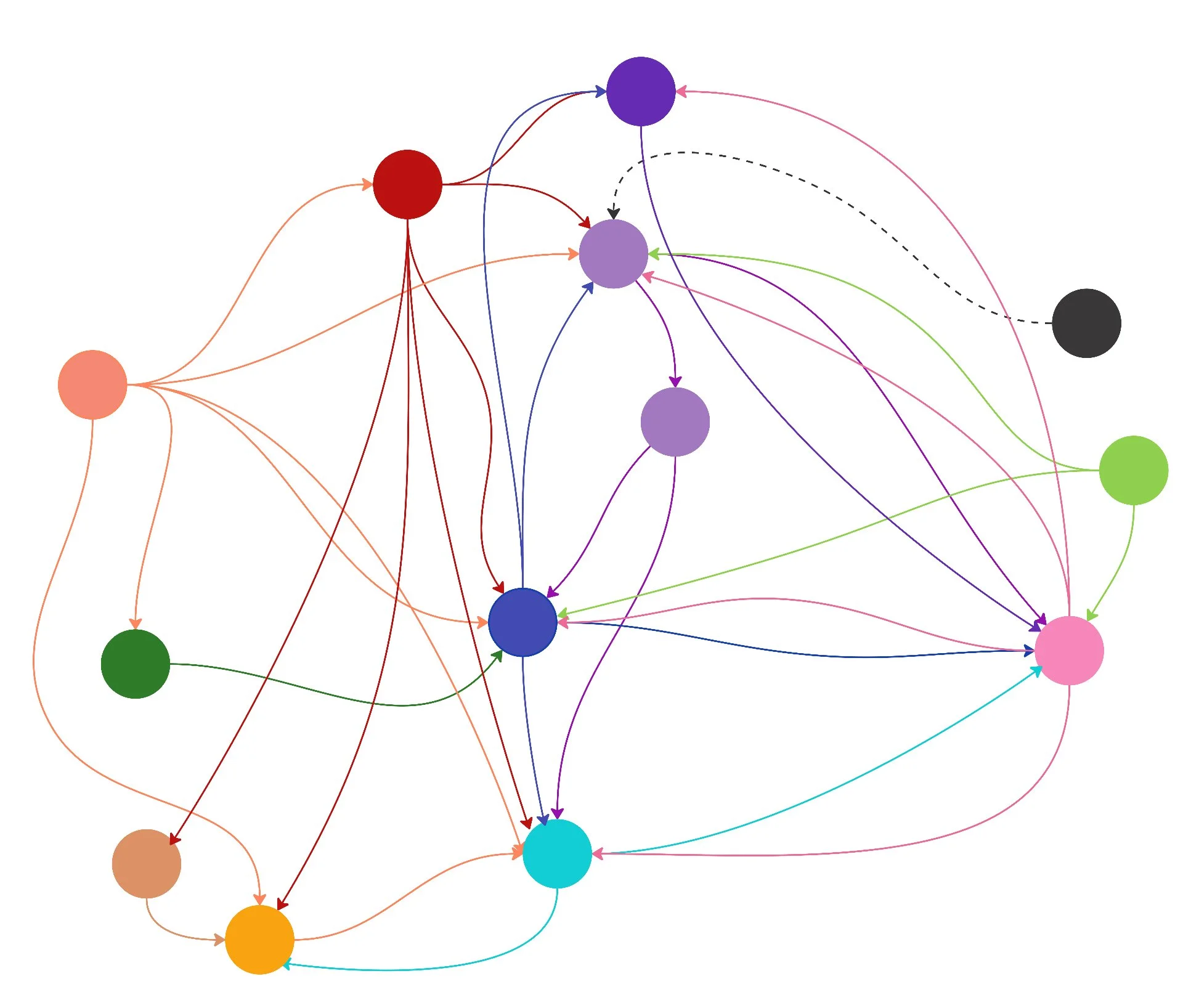
Documentation Network Analysis
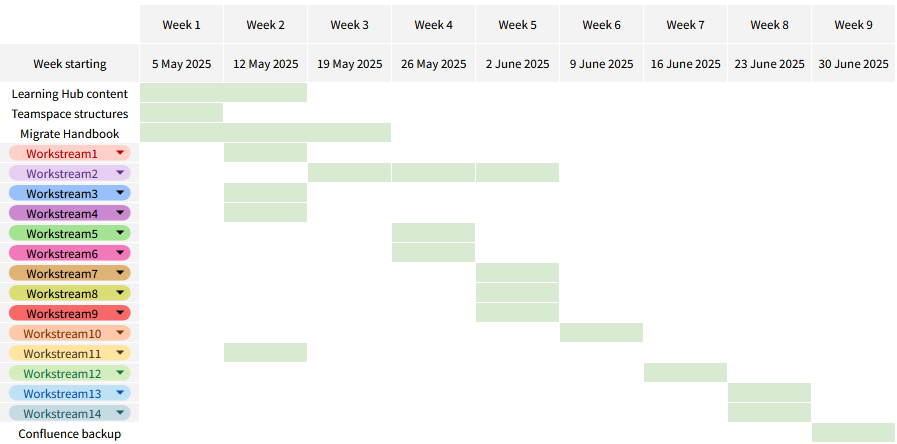
Migration Roadmap
Key Achievements
Stakeholder Research & Alignment
Conducted in-depth interviews with over eight workstream leads and key contributors to uncover documentation pain points, workflow incompatibilities, and tool preferences across the company. Synthesized these findings into network diagrams, conflict heatmaps, and alignment tables to surface strategic priorities. This ensured all voices were represented in the evaluation process and paved the way for buy-in around a unified direction.
Requirements Mapping & Prioritization
Developed a comprehensive matrix mapping 30+ documentation requirements across 8 workstreams, assigning weighted priorities and identifying areas of alignment and divergence. This provided a clear visual of which features mattered most to which teams, highlighting the need for centralized search, privacy controls, and ease of use. The matrix became a critical tool in facilitating cross-functional discussions and reaching consensus.
Compliance & Security Collaboration
Conducted extensive research into 14+ documentation platforms, including setting up sandbox environments, attending vendor demos, and evaluating real-world usage through partial content migration trials. Created detailed feature matrices and usability benchmarks tailored to amazee.io's unique documentation challenges. This research enabled informed, evidence-based decision-making and identified Notion as the strongest fit for both technical and non-technical users.
Training Materials & Team Enablement
Delivered live workshops, enablement decks, and async resources to support user adoption, change management, and long-term platform maintenance. Created modular training content that could be reused across onboarding, policy rollouts, and feature updates, ensuring consistency and reducing the burden on internal teams. Provided lightweight documentation and how-to guides tailored for both technical and non-technical audiences.
Tool Research & Evaluation
Partnered directly with the CISO to ensure that all proposed tools, workflows, and documentation practices met amazee.io's data sovereignty, access control, and compliance requirements. Evaluated platform security standards (e.g. SOC 2 ISO 27001) scoped role-based permission needs, and proposed governance models that protected sensitive documentation while enabling access where appropriate. This proactive collaboration ensured that security was built into the documentation strategy from the outset, earning trust from the most risk-sensitive stakeholders.
Systems Diagrams & Pattern Detection
Created a suite of visual artifacts including network diagrams, a conflict heatmap, and a comprehensive requirements matrix that made abstract documentation challenges concrete. These visuals revealed tool silos, asymmetric knowledge flows, mismatched priorities between technical and non-technical teams, and points of friction between workstreams. They became critical conversation tools, helping leadership and contributors quickly grasp complex issues, align around shared needs, and support evidence-based decision-making throughout the project.
Key Deliverables
Findings & insights report
Delivered a 30+ page final report summarizing key findings, user needs, tool comparisons, and actionable next steps. Included network diagrams of shared documentation flows, silo analysis, and alignment heatmaps. This report became the strategic foundation for leadership decisions around tool adoption, documentation restructuring, and contributor workflows.
Ran a structured GitBook trial to inform platform decision-making
Led a rigorous usability testing program with GitBook, including sandbox setup, GitLab integration, structured task flows, and hands-on testing across multiple workstreams. Gathered detailed feedback from technical and non-technical users, revealing critical limitations around collaboration, edit workflows, and permissions clarity. While GitBook showed promise for hybrid GitOps/WYSIWYG editing, flow testing revealed its merits relative to user needs. Its inline commenting was limited compared to other editing tools, and its real-time collaboration was less fluid than other tools. These insights enabled the team to make an informed decision to move forward with Notion instead, with a strong understanding of the benefits and trade-offs. The trial prevented premature tool adoption and demonstrated the value of user-centered decision-making.
Final recommendations
Proposed a migration roadmap from Confluence and MkDocs to Notion, structured around high-priority needs like contributor ease, version control, and public/private content separation. Recommendations accounted for both systemic issues and the practical realities of adoption.
Full-scale migration management
Designed and executed a 9-week end-to-end migration roadmap, covering planning, content auditing, tool transition, post-migration support. Personally migrated all content into the new platform, restructured it to match the updated navigation hierarchy, and ensured technical integrity throughout. Led each workstream through the transition via stakeholder onboarding, training, and structural alignment of their documentation. Maintained regular reporting to both leadership and contributor teams to keep progress transparent and collaborative. This hands-on leadership ensured that the migration launched on time, with strong internal adoption and no critical content loss.
Created comprehensive data backup of existing content prior to migration
Prior to migration and restructuring, exported a full snapshot of all Confluence spaces and pages in multiple formats (PDF, XML, CSV, and HTML) to ensure historical data integrity and rollback safety. This backup served as a critical reference point during the migration process and provided peace of mind to leadership and contributors alike. The multiple formats supported future reuse, auditing, and compliance needs, and helped de-risk the transition to the new information architecture.
Initiated post-migration cleanup of operational tools (Jira & Monday.com)
As a natural next step following the documentation overhaul, began auditing and consolidating project management systems. This includes fully migrating off Monday.com and cleaning up Jira boards to reflect current team workflows and reduce clutter. The goal is to align task tracking with the newly unified documentation structure, ensuring consistency, clarity, and cross-functional visibility across both documentation and day-to-day operations.

Conclusion
This engagement with amazee.io demonstrates how thoughtful documentation strategy, inclusive stakeholder engagement, and structured tool evaluation can drive meaningful operational change. Through audits, testing, training, and migration, GooseOps helped lay the foundation for a unified, scalable knowledge ecosystem that supports both technical precision and non-technical usability. The result is not just a better tool, but a more connected, empowered organization.